Learn · Diamond and gemstone shapes
Round brilliant
The round brilliant is the shape most people picture when they say "diamond". It is cut for one thing above all: light. Fifty-seven or fifty-eight facets, laid out in proportions that have been refined for a century, send more light back to your eye than any other shape.
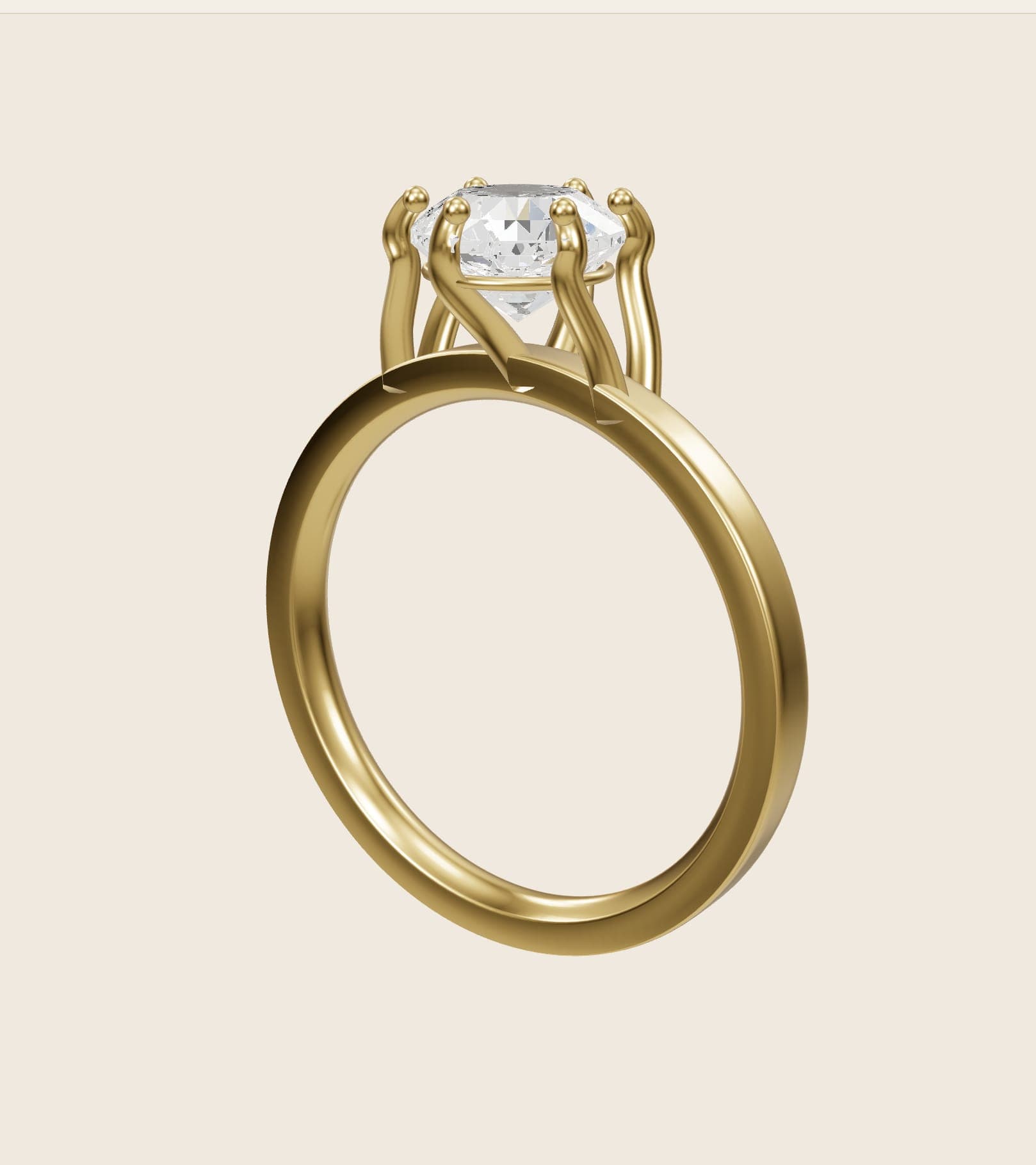
What it is
A round brilliant is a circular stone with a flat table on top, a crown of kite and star facets, a thin girdle around the edge, and a pavilion underneath cut to a point. Those pavilion angles are the reason it sparkles: they bounce light back up through the crown instead of letting it leak out the bottom.
Because the shape is symmetrical, a round looks the same from every direction on the hand. That is also why it matches almost any setting: four prongs, six prongs, a bezel, a halo, a hidden halo, a three-stone with any side shape. Nothing has to be designed around a point or a corner.
Round
The round brilliant: 57 or 58 facets cut for the most light return of any shape.
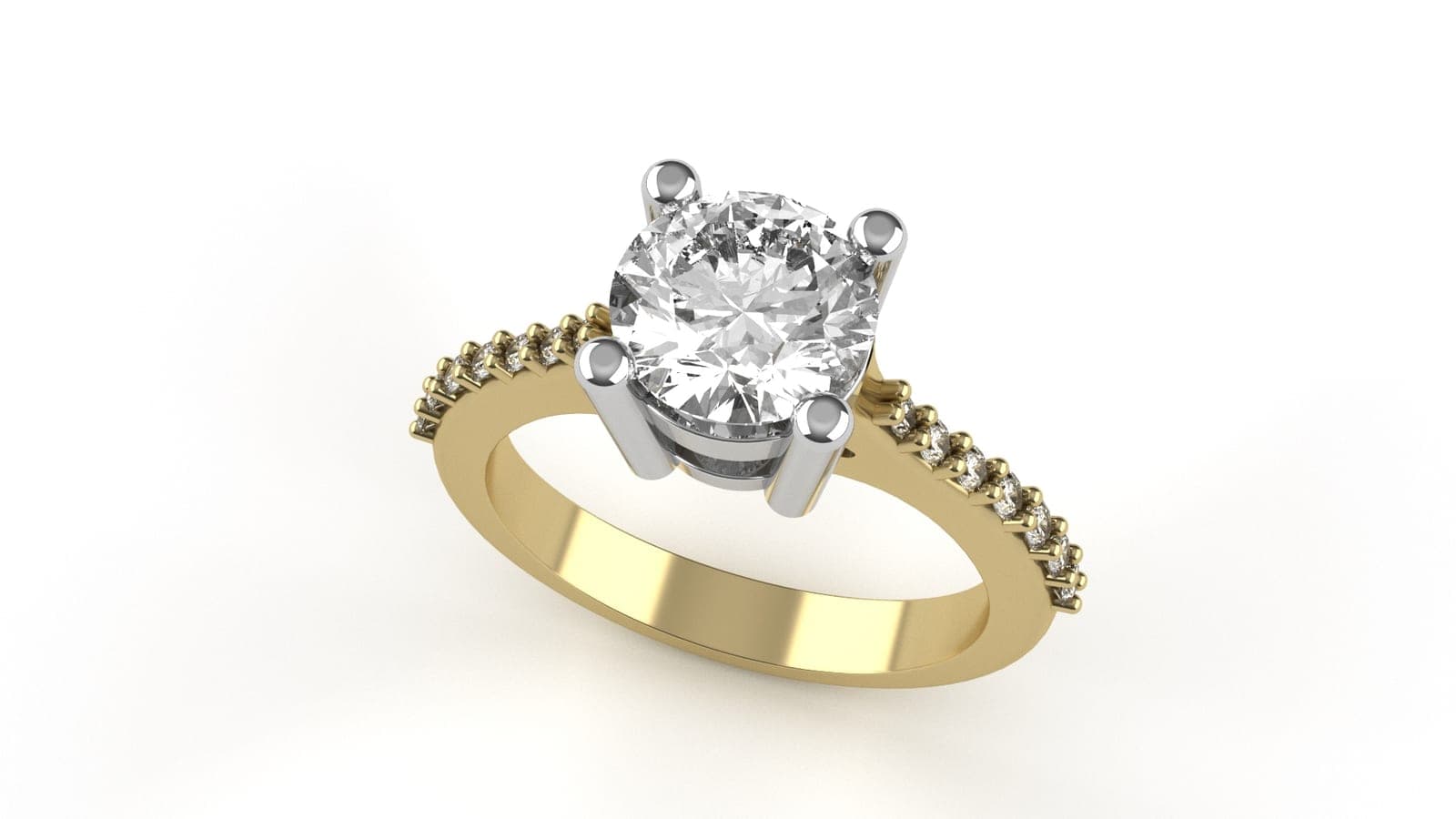
Why people love it
The round is the brightest cut there is, and the most forgiving to live with. It reads as a diamond from across a room, it sits low and symmetrical, and it never looks out of date. If you are not sure what shape you want, this is the safe answer, and a beautiful one.
It also holds its value best. Rounds are graded and traded in larger numbers than any other shape, so a well-cut round is easy to describe, easy to compare and easy to sell on later if it ever comes to that.
- The brightest, most sparkling cut.
- Easiest to match with any setting, band or wedding ring.
- Holds its value best on the resale market.
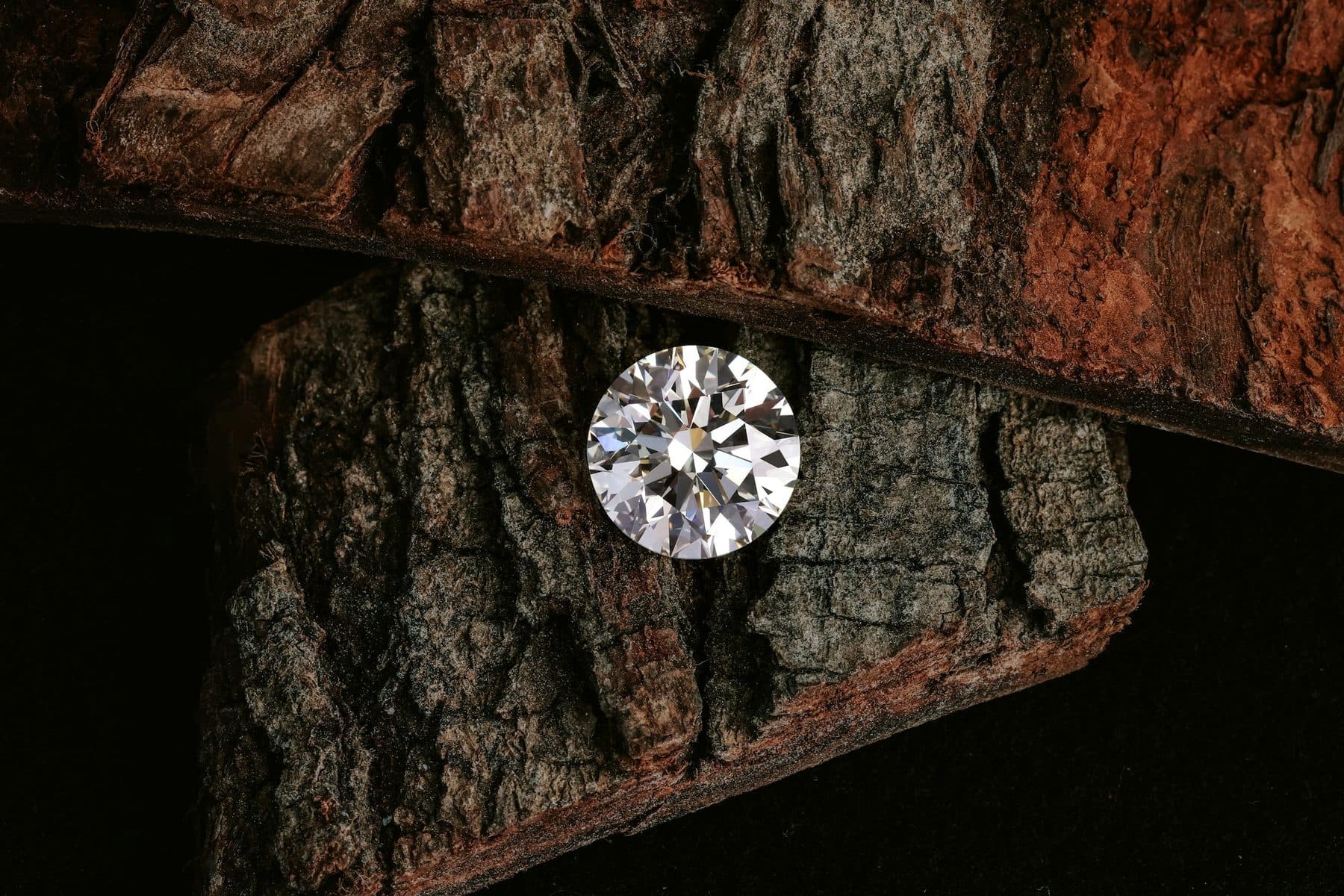
Trade-offs
A round costs the most per carat, because cutting a circle out of a rough crystal wastes the most material. A one-carat round also faces up a little smaller than a one-carat oval or pear, because its weight sits deeper in the pavilion rather than spread across the top.
Cut quality matters more here than in any other shape. A deep or shallow round loses the brightness that is the whole point, so Sara looks at the cut grade and the proportions before the color and clarity.
- Costs the most per carat, because the cut wastes the most rough.
- Looks a little smaller than elongated shapes of the same weight.
Who it suits
Anyone who wants the classic look, anyone who wants maximum sparkle, and anyone who plans to wear a straight wedding band beside the ring. It suits every hand and every finger length, and it works in every metal.
Sizes
| Diameter | Depth | Diamond · approx. |
|---|---|---|
| 5.0 mm | 3.1 mm | 0.47 ct |
| 5.5 mm | 3.4 mm | 0.62 ct |
| 6.0 mm | 3.7 mm | 0.80 ct |
| 6.5 mm | 4.0 mm | 1.02 ct |
| 7.0 mm | 4.3 mm | 1.28 ct |
| 7.5 mm | 4.6 mm | 1.57 ct |
| 8.0 mm | 4.9 mm | 1.91 ct |
| 8.5 mm | 5.2 mm | 2.29 ct |
| 9.0 mm | 5.5 mm | 2.71 ct |
Round diameters and their approximate diamond weights at a typical 61% depth. A real stone varies with its cut; Sara confirms the exact weight from the certificate. Natural and lab-grown diamonds weigh the same. All figures approx.
What affects the cost
For a round, the cut grade sets the price more than people expect: two stones of the same carat, color and clarity can differ a lot if one is cut to excellent proportions and the other is not. Carat weight comes next, then color and clarity, then whether the stone is natural or lab-grown.
The setting adds the metal, the head, any pavé or halo stones and the hand-setting time. Sara quotes the whole piece after a consultation, once the stone and the design are chosen.
Every custom piece is quoted after a consultation; there are no posted prices for custom work.
Care
A diamond is the hardest thing you own, but the metal around it is not. Take the ring off for the gym, the garden and anything with a bar or a rope in it, and keep it away from chlorine and bleach, which attack gold alloys over time.
Clean it at home in warm water with a drop of dish soap and a soft toothbrush, rinse, and dry with a lint-free cloth. Once a year or so, have the prongs checked. Pacific Jewel rings come back to Sara for a clean and an inspection whenever you like.
Questions
How big is a one-carat round?
About 6.5 mm across. A 1.5 ct round is about 7.4 mm, and a 2 ct round is about 8.1 mm. The studio shows the millimeters and the carats side by side.
Four prongs or six on a round?
Four shows more of the stone; six holds it more securely and keeps the outline rounder. On a round of 1 ct or more, Sara usually suggests six.
Does a round look smaller than other shapes?
Slightly, at the same carat weight. Elongated shapes spread their weight across the top. If face-up size matters most, an oval or a marquise gives more at the same weight.
Will a straight wedding band sit flush against a round solitaire?
Usually, yes, at a medium or high setting height. A low setting may need a contoured band. Sara checks this in the CAD before anything is made.