Learn · Diamond and gemstone shapes
Princess
A princess cut is a crisp square with the sparkle of a round brilliant. It is modern, geometric and, carat for carat, usually the least costly brilliant cut you can buy.
What it is
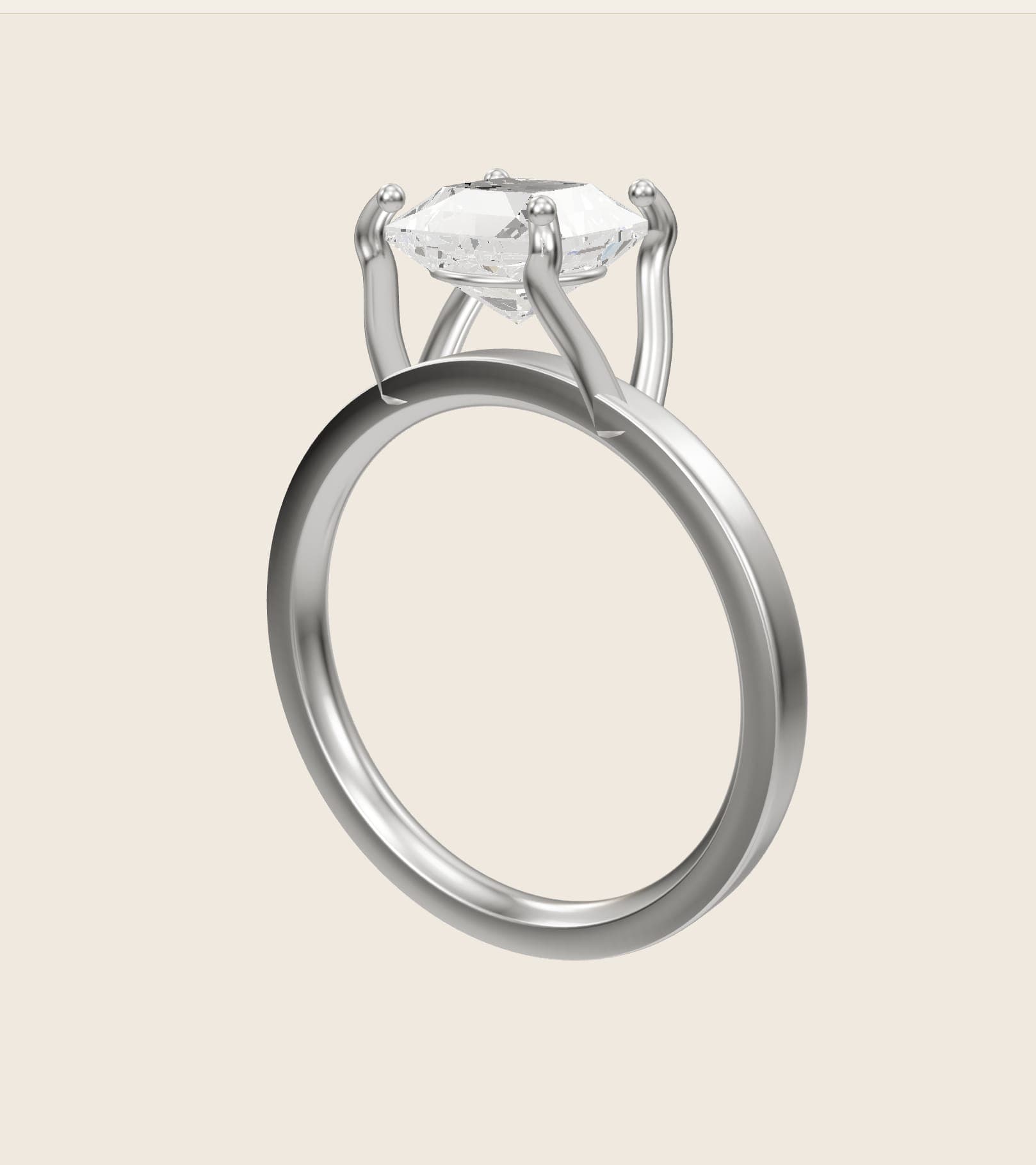
The princess is a square (sometimes slightly rectangular) brilliant with sharp, uncut corners. Its pavilion is cut in a pattern that throws light back the way a round does, so it sparkles rather than flashes. The corners are the defining feature and the care point: they are where a knock would land.
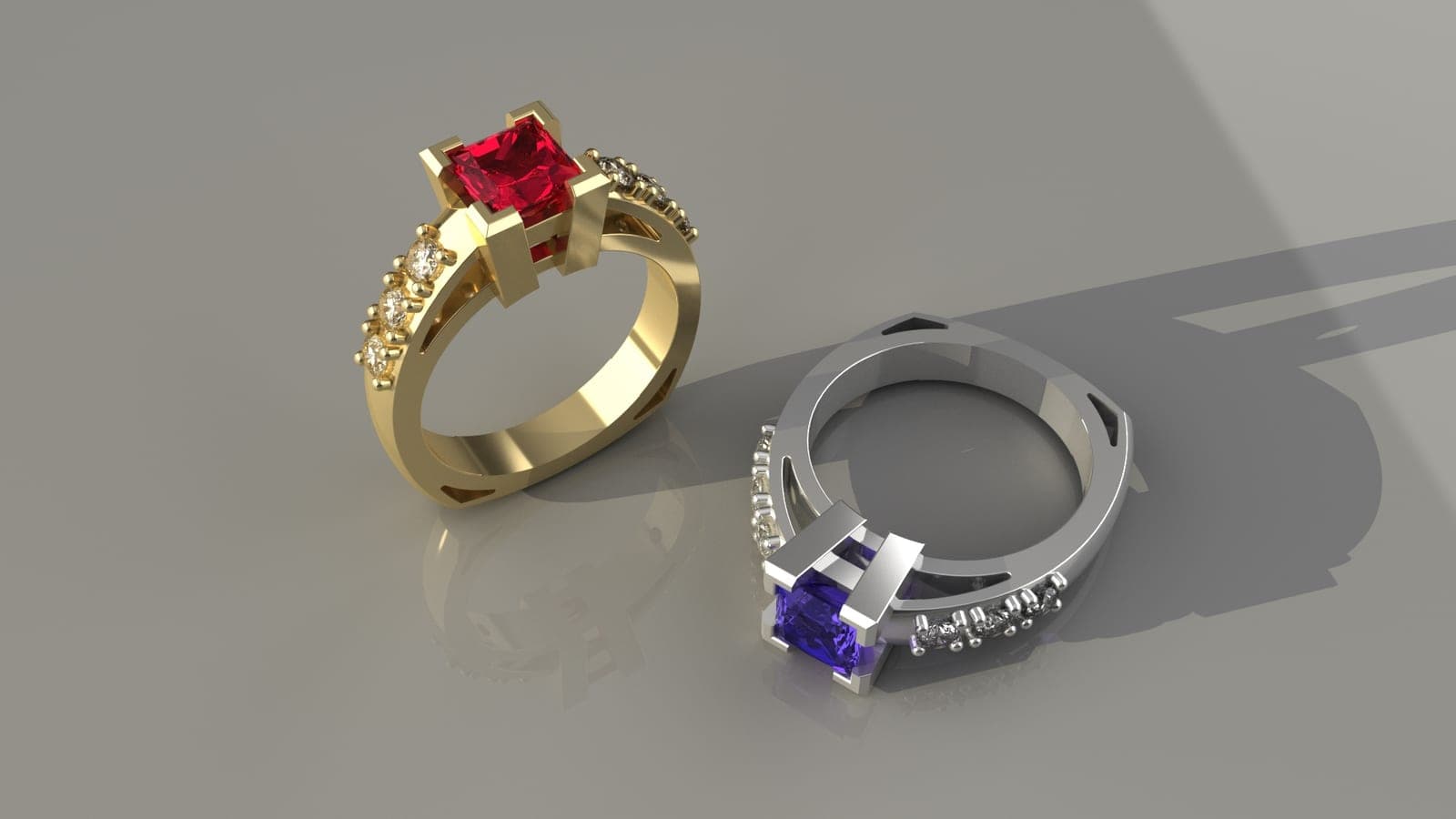
Princess cuts are set with four prongs at the corners, often V-prongs, or in a bezel or a channel, which cover the corners completely.
Princess
A square brilliant with sharp corners.
Why people love it
Clean lines and real sparkle, and a good price per carat, because cutting a square wastes less rough than cutting a circle. It suits modern settings and looks strong in a bezel.
- Crisp, modern, very sparkly.
- Usually the least costly brilliant cut per carat.
Trade-offs
The sharp corners are the most chip-prone spot on any stone; they must be protected and should be checked. A princess cut also faces up a little smaller than a round of the same weight, and inclusions near the corners matter more than they would elsewhere.
- The sharp corners are the most chip-prone spot on any stone; V-prongs or a bezel protect them.
Who it suits
Someone who wants a square, modern look with brilliant sparkle, who is happy to protect the corners with V-prongs or a bezel, and who wants to make the most of a budget.
A princess cut and a straight wedding band are a natural pair: the stone's flat sides line up with the band, and at a medium setting height the two sit flush. In a channel or a bezel the corners disappear into metal entirely, which is the most carefree way to wear this shape every day.
Sizes
| Length × width | Depth | Diamond · approx. |
|---|---|---|
| 4.5 × 4.5 mm | 3.2 mm | 0.53 ct |
| 5.0 × 5.0 mm | 3.5 mm | 0.73 ct |
| 5.5 × 5.5 mm | 3.9 mm | 0.97 ct |
| 6.0 × 6.0 mm | 4.2 mm | 1.25 ct |
| 6.5 × 6.5 mm | 4.6 mm | 1.60 ct |
| 7.0 × 7.0 mm | 4.9 mm | 1.99 ct |
| 7.5 × 7.5 mm | 5.3 mm | 2.45 ct |
Princess side lengths with the approximate diamond weight at a typical 70% depth. A princess is deep for its width, so it weighs more than a round of the same span. Natural and lab-grown diamonds weigh the same. All figures approx.
What affects the cost
Carat, color and clarity, then cut. Natural or lab-grown is the biggest lever. V-prong heads take more hand-setting time than a plain four-prong; a bezel uses more metal.
Every custom piece is quoted after a consultation; there are no posted prices for custom work.
Care
Protect the corners. Take the ring off for anything hands-on, and have the prongs checked at every cleaning.
Clean it at home in warm water with a drop of dish soap and a soft toothbrush, rinse, and dry with a lint-free cloth. Once a year or so, have the prongs checked. Pacific Jewel rings come back to Sara for a clean and an inspection whenever you like.
Questions
Princess or cushion?
Princess is crisp and square with sharp corners; cushion is a soft square with rounded corners and a more vintage feel. Both are in the studio.
How big is a one-carat princess?
About 5.5 mm square. It looks smaller than a one-carat round across the top, because it is deeper.
Do princess cuts chip?
The corners can, if they are unprotected and take a knock. V-prongs or a bezel make it an everyday ring.
Can a princess cut be bezel set?
Yes, and it is one of the best-looking bezels there is: a clean square of metal around a square of light.