Learn · Diamond and gemstone shapes
Radiant
A radiant has the outline of an emerald cut and the sparkle of a round. Cut corners, straight sides, and brilliant faceting underneath that fills the whole stone with light.
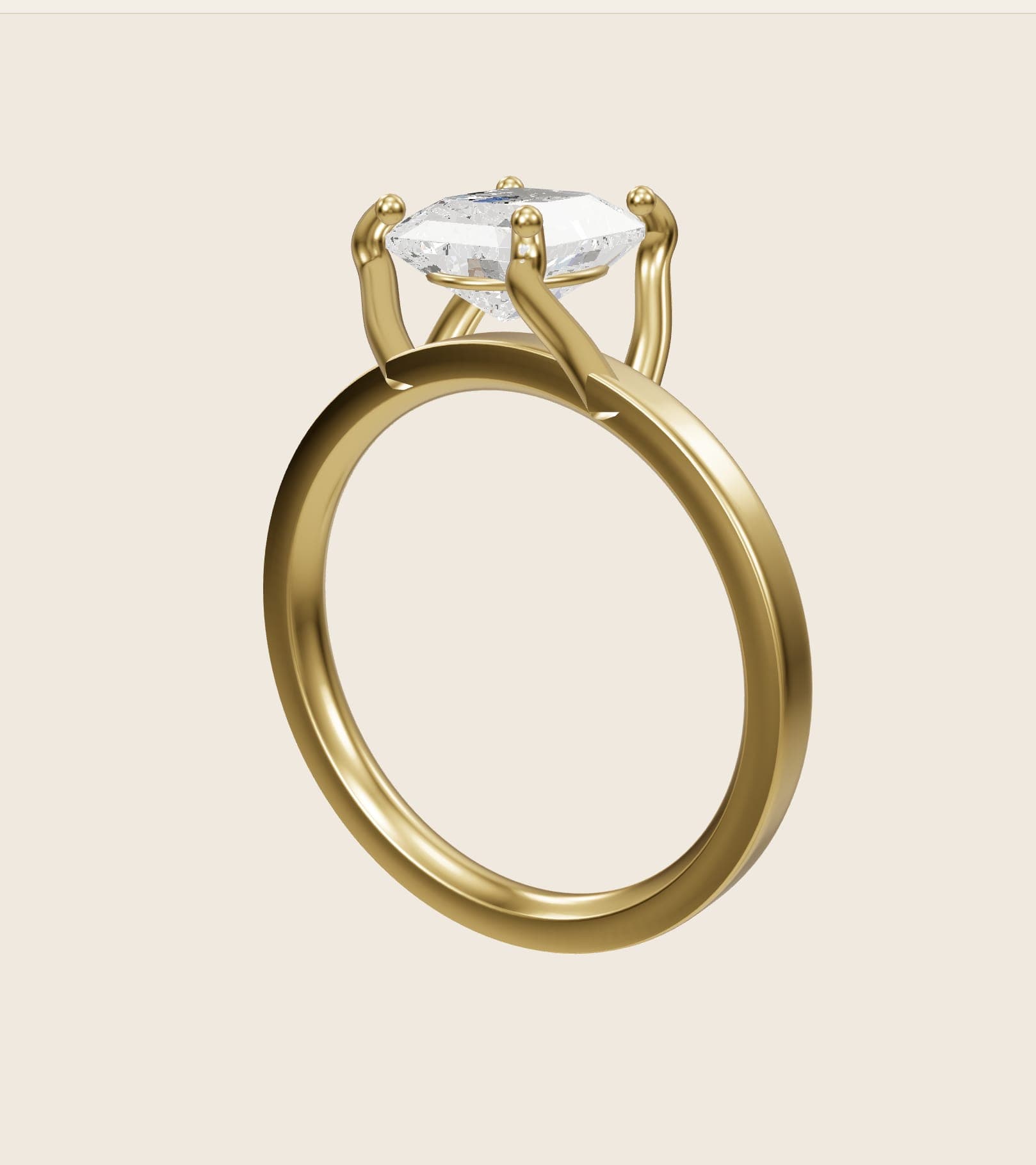
What it is
The radiant cut takes the emerald cut's rectangle-with-cut-corners outline and replaces the stepped facets with a brilliant pattern. The result sparkles like a round or a cushion, with a crisp geometric edge. Ratios run from square (about 1.05) to elongated (around 1.3 to 1.5).
The cut corners make it durable and give the prongs a natural place to sit; a radiant is also well suited to a bezel, and its straight sides pair cleanly with a straight wedding band.
Radiant
An emerald-cut outline with brilliant faceting underneath.
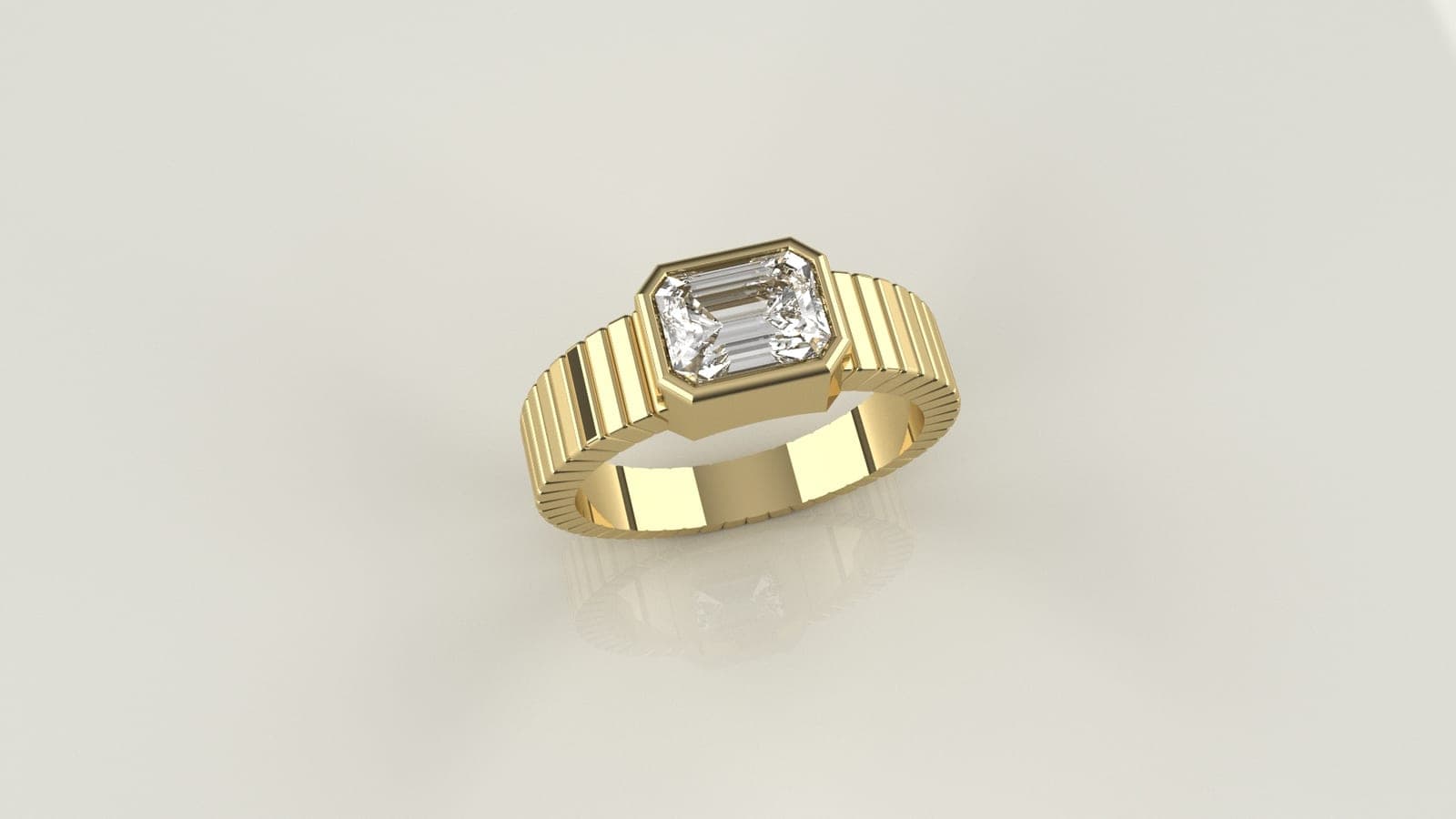
Why people love it
It is the best of two shapes: the elegant outline of an emerald cut and the fire of a brilliant. It hides inclusions and color better than a step cut, and it usually costs less per carat than a round.
- The sparkle of a round in a rectangular outline.
- Cut corners are durable and suit prongs or a bezel.
Trade-offs
A radiant faces up a little smaller than an emerald cut of the same weight, because its brilliant pavilion is deeper. The facet pattern is busier than a step cut, which some people find less calm.
- Faces up a little smaller than an emerald cut of the same weight.
Who it suits
Someone who likes the emerald-cut outline but wants sparkle, or who wants a durable, geometric stone that hides a lot. It looks especially good elongated in a solitaire or a three-stone.
Because a radiant's sides are straight, a straight wedding band sits flush beside it at a medium or high setting height, with no contour needed. Set east-west, the longer side runs across the finger and the band meets it along its full length, which is a neat, modern look Sara renders on request.
Sizes
| Length × width | Depth | Diamond · approx. |
|---|---|---|
| 6.0 × 4.8 mm | 3.1 mm | 0.73 ct |
| 7.0 × 5.6 mm | 3.6 mm | 1.16 ct |
| 8.0 × 6.4 mm | 4.2 mm | 1.73 ct |
| 9.0 × 7.2 mm | 4.7 mm | 2.46 ct |
| 10.0 × 8.0 mm | 5.2 mm | 3.37 ct |
| 11.0 × 8.8 mm | 5.7 mm | 4.48 ct |
Radiant lengths at a 1.25 ratio with the approximate diamond weight at a typical 65% depth. Natural and lab-grown diamonds weigh the same. All figures approx.
What affects the cost
Carat, color and clarity, then cut, then natural versus lab-grown. The setting side is usually simple: four prongs at the corners or a bezel.
Every custom piece is quoted after a consultation; there are no posted prices for custom work.
Care
A diamond is the hardest thing you own, but the metal around it is not. Take the ring off for the gym, the garden and anything with a bar or a rope in it, and keep it away from chlorine and bleach, which attack gold alloys over time.
Clean it at home in warm water with a drop of dish soap and a soft toothbrush, rinse, and dry with a lint-free cloth. Once a year or so, have the prongs checked. Pacific Jewel rings come back to Sara for a clean and an inspection whenever you like.
Questions
Radiant or emerald cut?
Same outline; the radiant sparkles and the emerald cut flashes. The radiant also hides inclusions better. See both in the studio.
Radiant or cushion?
Radiants have straight sides and cut corners; cushions have curved sides and rounded corners. Radiants read crisper.
How big is a one-carat radiant?
Around 6.5 × 5.2 mm at a 1.25 ratio.
Does a radiant need V-prongs?
The cut corners are already protective, so plain prongs at the corners are fine; V-prongs or a bezel add more.