Learn · Diamond and gemstone shapes
Marquise
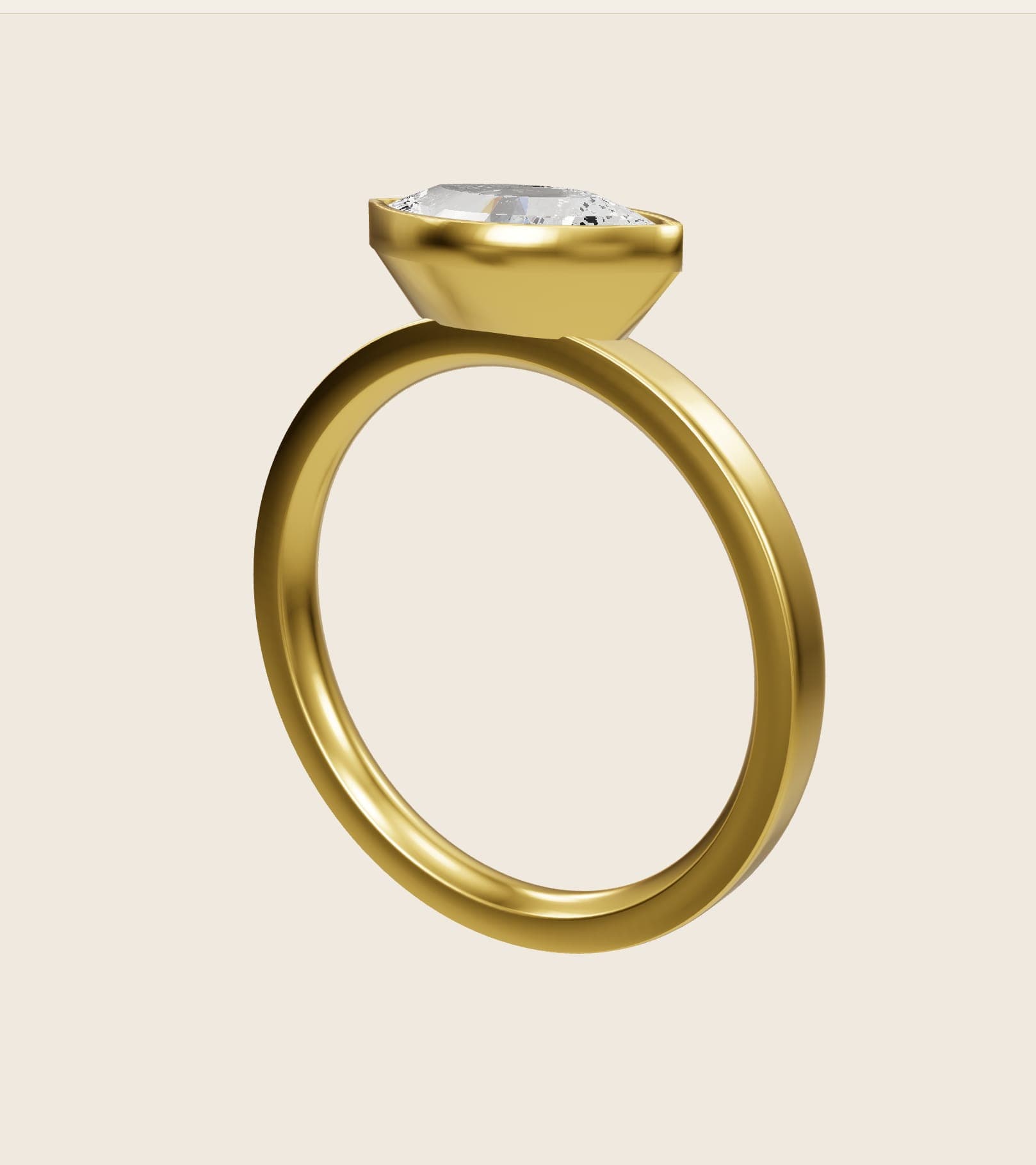
The marquise is a long lens with a point at each end. No shape covers more of the finger per carat, and none looks more striking set east-west, lying across the finger like a bar of light.
What it is
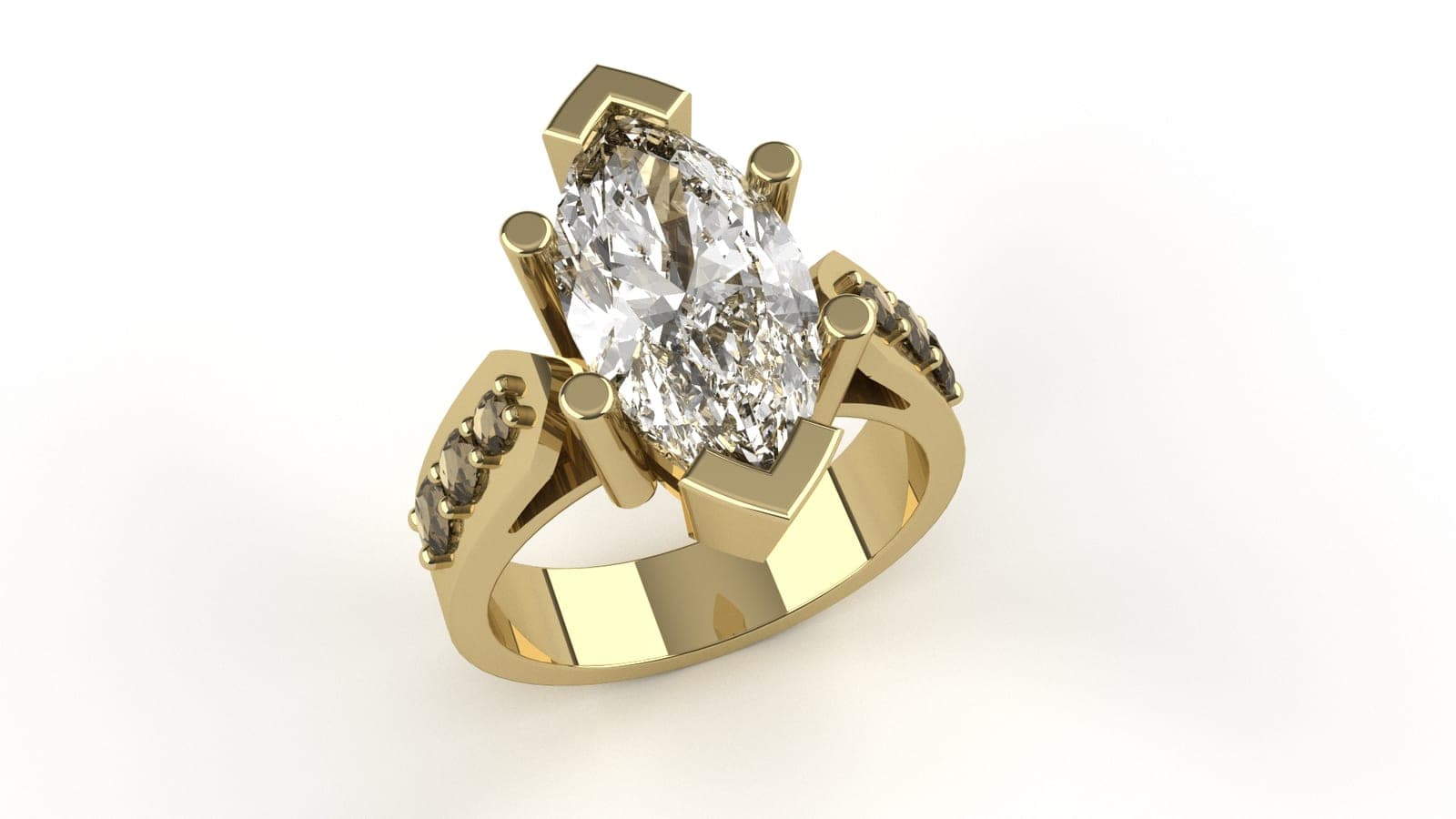
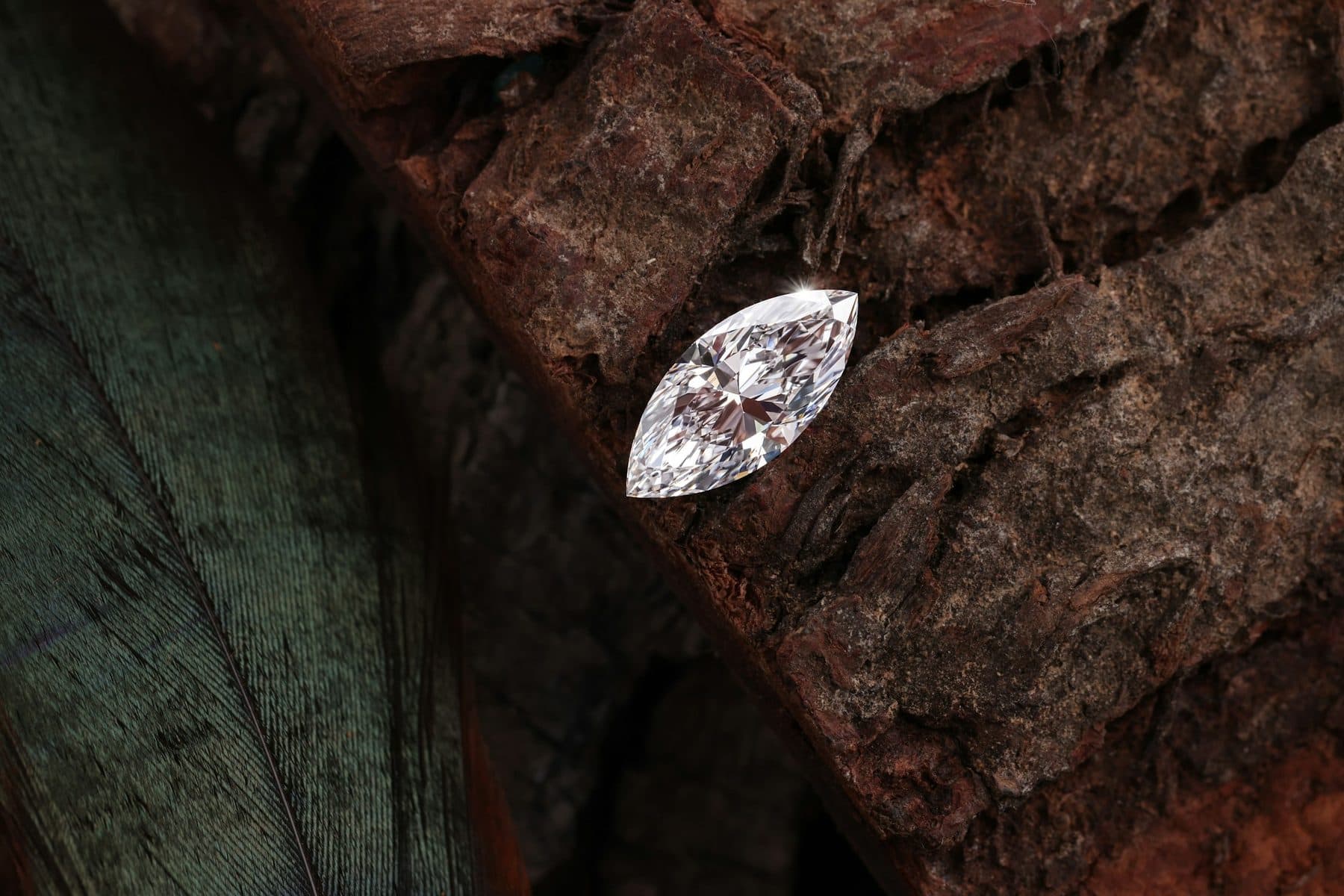
A marquise is a brilliant cut, so it sparkles, in an outline like a boat or an eye. Ratios run from about 1.7 to 2.3; the longer it is, the more slender it looks. Both points are protected by V-prongs, or the whole stone sits in a bezel.
Set north-south, a marquise lengthens the finger dramatically. Set east-west, it reads wide and modern and sits lower on the hand.
Marquise
A long, lens-shaped cut with two points.
Why people love it
The most finger coverage per carat of any shape, a dramatic outline, and real sparkle. East-west marquise rings have become a signature modern look, and a bezel makes them smooth enough to wear every day.
- The most finger coverage per carat of any shape.
- Striking east-west, across the finger.
Trade-offs
Two points to protect, with V-prongs or a bezel. Bow-ties are common, so the cut needs to be good, and a marquise with poor symmetry shows it. A straight wedding band sits further away from an east-west stone; a contoured band can be designed to meet it.
- Two points to protect, with V-prongs or a bezel.
- Bow-ties are common; the stone needs a good cut.
Who it suits
Someone who wants a large, distinctive look at a sensible weight, who likes the east-west style, and who wants the smoothest everyday wear from a bezel.
Think about the band at the same time. An east-west marquise sits across the finger, so a straight wedding band sits a little away from it and the gap reads as part of the design. A north-south marquise meets a straight band at its lower point; a contoured band wraps around it. Either way, Sara designs the band to the stone rather than the other way around.
Sizes
| Length × width | Depth | Diamond · approx. |
|---|---|---|
| 7.0 × 3.5 mm | 2.1 mm | 0.30 ct |
| 8.0 × 4.0 mm | 2.4 mm | 0.45 ct |
| 9.0 × 4.5 mm | 2.7 mm | 0.63 ct |
| 10.0 × 5.0 mm | 3.0 mm | 0.87 ct |
| 11.0 × 5.5 mm | 3.3 mm | 1.16 ct |
| 12.0 × 6.0 mm | 3.6 mm | 1.50 ct |
Marquise lengths at a 2.0 ratio with the approximate diamond weight at a typical 60% depth. A long outline for very little weight. Natural and lab-grown diamonds weigh the same. All figures approx.
What affects the cost
Carat, color and clarity first, then cut and symmetry, which matter more than usual. Natural or lab-grown changes the price the most. A bezel uses more metal than prongs but little setting time; V-prong heads take more hand work.
Every custom piece is quoted after a consultation; there are no posted prices for custom work.
Care
Both points are vulnerable to a knock. A bezel protects them completely; with V-prongs, have them checked at every cleaning and take the ring off for hands-on work.
Clean it at home in warm water with a drop of dish soap and a soft toothbrush, rinse, and dry with a lint-free cloth. Once a year or so, have the prongs checked. Pacific Jewel rings come back to Sara for a clean and an inspection whenever you like.
Questions
East-west or north-south?
East-west reads wide and modern and sits lower; north-south lengthens the finger. The studio switches between them with one toggle.
What ratio should a marquise be?
Around 2.0 is classic. Over 2.2 looks very slender; under 1.8 looks fuller and shows the points less.
Is a marquise fragile?
The points are the only weak spots. A bezel removes the worry; V-prongs protect them well if they are checked now and then.
How big is a one-carat marquise?
Around 11 × 5.5 mm at a 2.0 ratio: the longest one-carat outline there is.