Learn · Diamond and gemstone shapes
Pear
A pear is a teardrop: one rounded end, one point. It is a shape with a direction, and that gives it personality. Worn point-up it lengthens the finger; worn point-down it reads softer. Either way, it is distinctive without being loud.
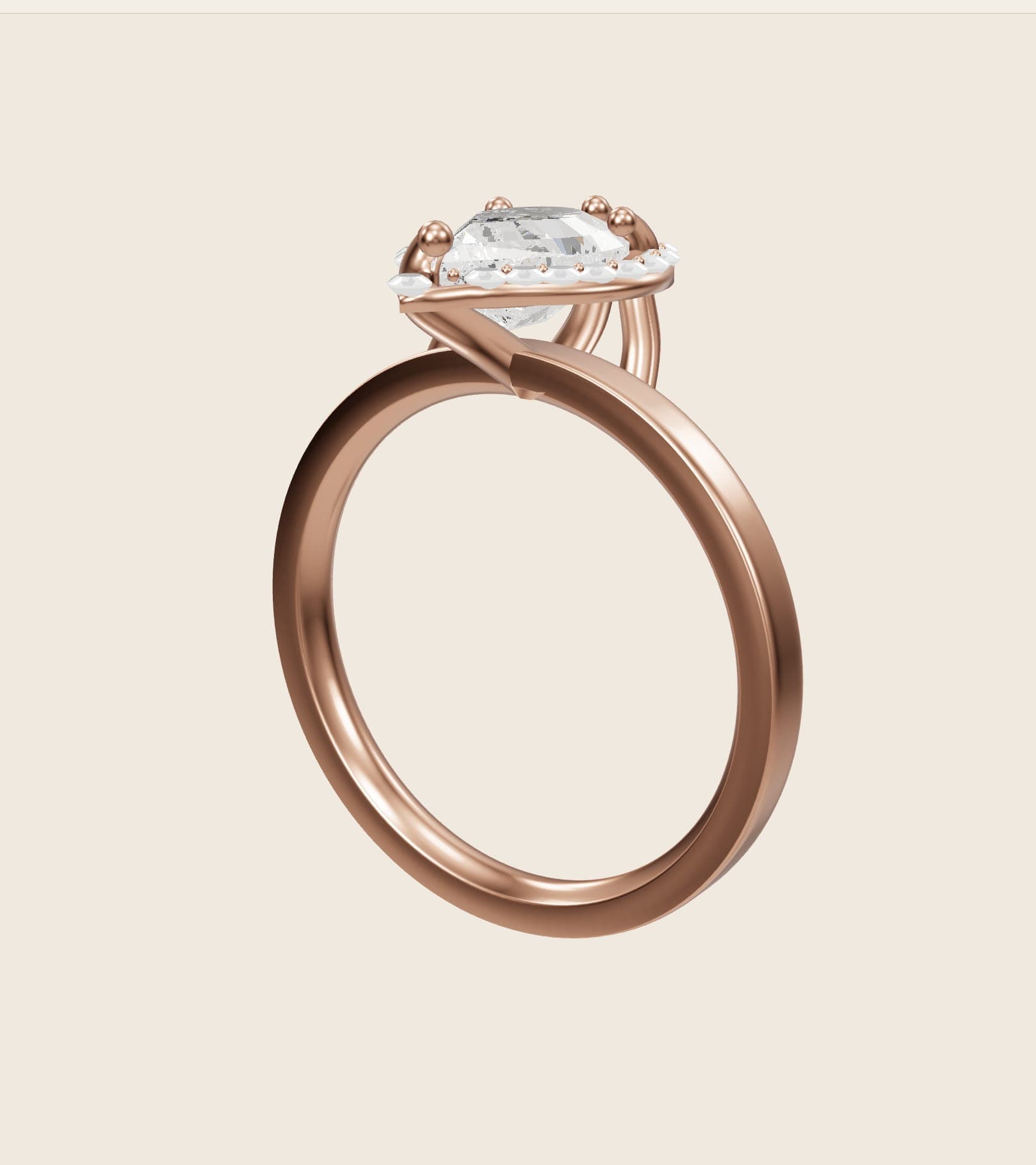
What it is
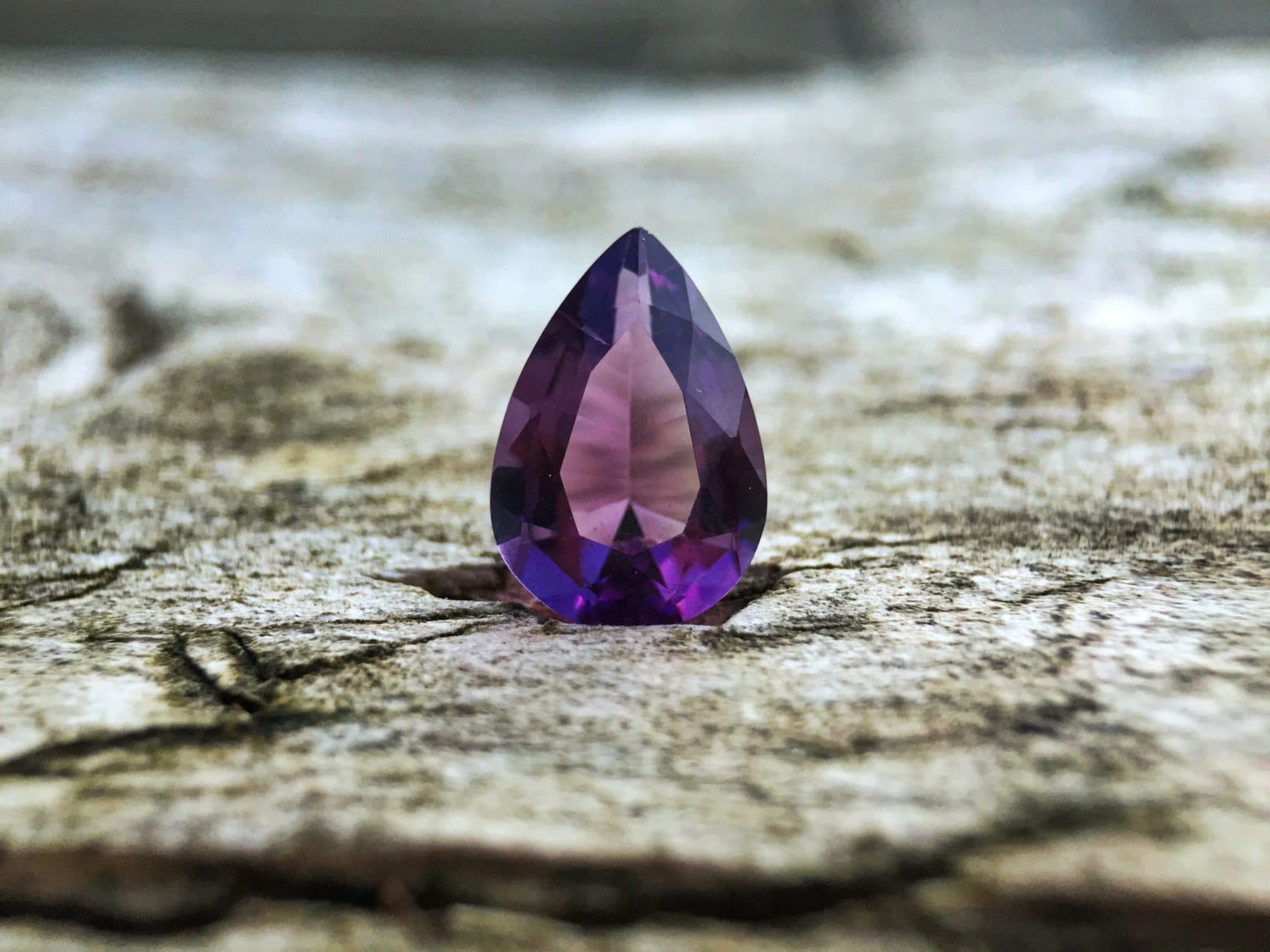
The pear is a brilliant cut, so it sparkles like a round, shaped into a teardrop. The rounded end is like half an oval; the pointed end tapers to a tip. Ratios run from about 1.4 (fuller) to 1.8 (slender). The point is protected by a V-shaped prong that cradles it from both sides.
Pear
A teardrop: one rounded end, one point.
Why people love it
A pear covers more of the finger than any shape except the marquise, and it faces up large for its weight. It is distinctive, it works in a halo or a bezel, and it makes a striking center for a three-stone with round sides.
- Lengthens the finger more than any shape but the marquise.
- Distinctive without being loud.
Trade-offs
The point is the weak spot: it needs a V-prong or a bezel, and it should not be set so it catches on things. Pears can show a bow-tie across the wide end. Symmetry matters more than in a round, because a lopsided pear is easy to see.
Point up or point down is a real decision, and so is which way the wedding band meets it. Sara shows both in the CAD before anything is made.
- The point needs a V-prong to protect it.
- Can show a bow-tie.
- Worn point-up or point-down is a decision to make.
Who it suits
Someone who wants a shape with character, a longer look on the finger, and plenty of sparkle. It suits shorter fingers worn point-up and looks lovely in rose gold.
The wedding band is worth planning early. Worn point-up, the rounded end of the pear meets a straight band well; worn point-down, the point reaches toward the band and a small notch or a contoured band keeps the two from fighting. Sara shows both in the renderings so the set is decided before anything is cast.
Sizes
| Length × width | Depth | Diamond · approx. |
|---|---|---|
| 6.0 × 3.9 mm | 2.3 mm | 0.32 ct |
| 7.0 × 4.5 mm | 2.7 mm | 0.51 ct |
| 8.0 × 5.2 mm | 3.1 mm | 0.76 ct |
| 9.0 × 5.8 mm | 3.5 mm | 1.09 ct |
| 10.0 × 6.5 mm | 3.9 mm | 1.49 ct |
| 11.0 × 7.1 mm | 4.3 mm | 1.98 ct |
Pear lengths at a 1.55 ratio with the approximate diamond weight at a typical 60% depth. The pear's weight factor changes with its ratio; the studio uses the matching factor. Natural and lab-grown diamonds weigh the same. All figures approx.
What affects the cost
Carat, color, clarity and cut, with symmetry weighing more than in a round. Natural or lab-grown is the biggest lever. A V-prong head and any halo add setting time; the halo also adds melee.
Every custom piece is quoted after a consultation; there are no posted prices for custom work.
Care
Treat the point gently: it is the part most likely to chip from a knock. Take the ring off for anything hands-on, and have the V-prong checked at every cleaning.
Clean it at home in warm water with a drop of dish soap and a soft toothbrush, rinse, and dry with a lint-free cloth. Once a year or so, have the prongs checked. Pacific Jewel rings come back to Sara for a clean and an inspection whenever you like.
Questions
Point up or point down?
Point up (toward the fingertip) lengthens the finger and is the more common choice; point down reads softer. Sara renders both so you can decide.
What ratio should a pear be?
Around 1.5 to 1.6 is classic. Longer pears look elegant but show more bow-tie; shorter ones look fuller.
Does a pear need a V-prong?
Yes, or a bezel. The V-prong protects the point and is the standard way to set a pear.
How big is a one-carat pear?
About 8.5 × 5.5 mm at a 1.55 ratio, which is long on the finger for the weight.