Learn · Stones
Choosing a gemstone for a ring you wear every day
Two things decide how a gemstone stands up to life on a hand: hardness, which resists scratches, and toughness, which resists chipping and breaking. They are not the same thing, and the stones the Design Studio offers sit in very different places on both.
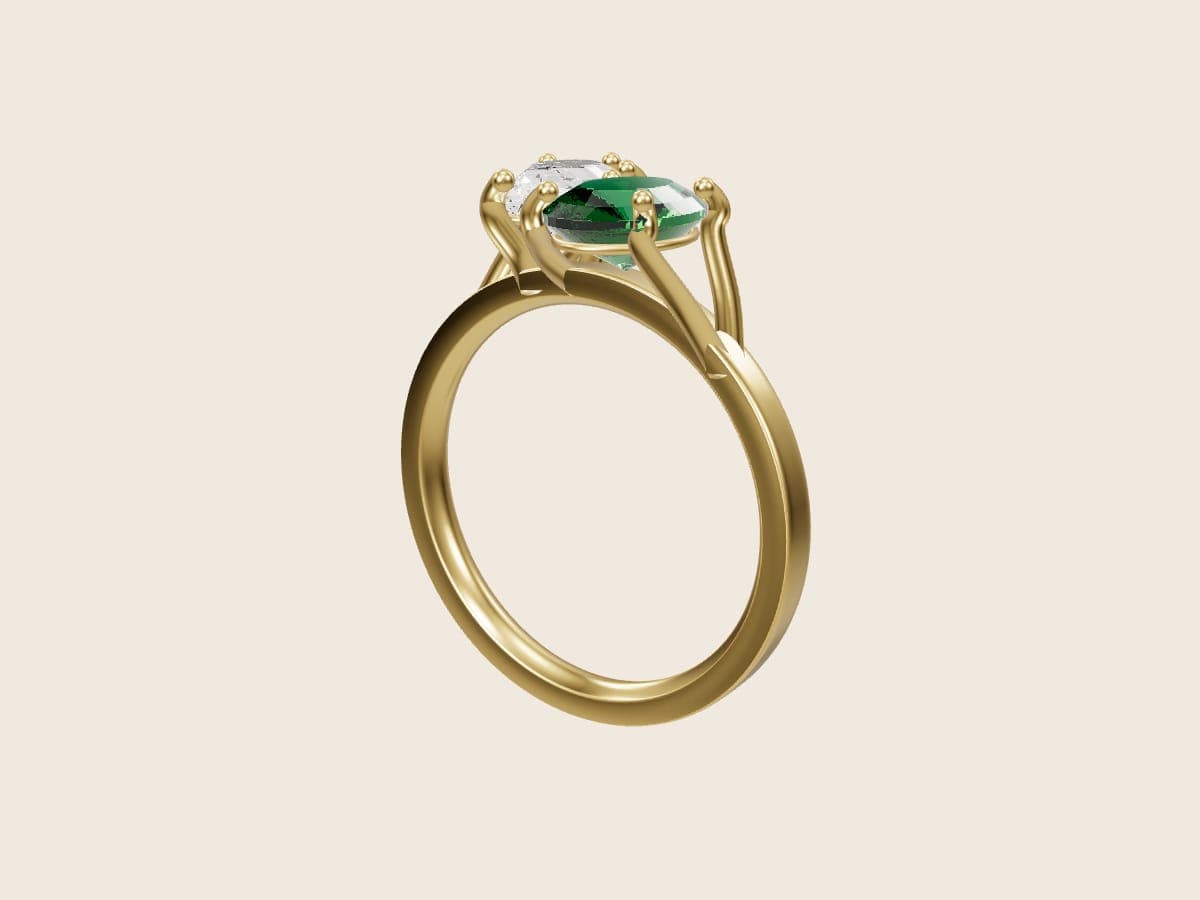
What it is
Hardness first. On the Mohs scale, diamond is 10. Ruby and sapphire, both corundum, are 9. Emerald, aquamarine and morganite, all varieties of beryl, are 7.5 to 8.
Toughness is separate. Diamond is the hardest, but it has cleavage directions, where a hard blow can split it. Ruby and sapphire have excellent toughness and no cleavage. Emerald’s toughness is fair to good, and nearly all emeralds have fractures. Morganite is more likely to chip than harder gems, and aquamarine is durable when it is protected from scratches and hard knocks.
The stones
- SapphireCorundum in every color but red: 9 on the Mohs scale, tough, and made for a ring worn every day.
- RubyRed corundum, colored by chromium: as durable as sapphire, and the birthstone for July.
- EmeraldGreen beryl, nearly always filled: why it wants a bezel or a halo, and how to clean it.
- AquamarineBlue beryl, colored by iron and usually heat-treated: durable when protected from knocks.
- MorganitePink beryl, colored by manganese: more likely to chip, so a protective setting suits it.
- Natural vs lab-grown diamondsBoth are real diamonds; the choice is about budget, size and what resale means to you.
Why people love it
Color, and often a birthday. Ruby is the birthstone for July, sapphire for September, emerald for May, aquamarine for March and diamond for April.
Trade-offs
The softer and less tough the stone, the more its setting matters. Ruby and sapphire can be worn every day. Emerald and morganite do best in a protective setting, such as a bezel or a halo, for daily wear. Aquamarine is durable when it is protected from scratches and hard knocks.
Ask about treatment. Heating is the common treatment for ruby and sapphire; most emeralds are filled with oils, resins or polymers; most aquamarine is heat-treated to a purer blue; and morganite almost always is, to improve its pink. Ask, too, whether a stone is natural or laboratory-grown.
Who it suits
For a ring worn every day with the least to think about: diamond, ruby or sapphire. For emerald, aquamarine or morganite: a setting that protects the stone, and a ring taken off for hard work.
Sizes
The Design Studio offers natural and lab-grown diamond; blue, pink, yellow and white sapphire; ruby; emerald; morganite; and aquamarine, from 4 to 12 mm long, and shows each stone’s approximate weight from its own density. By the studio’s figures, corundum (specific gravity 4.0) weighs about 1.1 times a diamond (3.52) of the same size, and beryl (2.72 to 2.8) about three quarters to four fifths.
What affects the cost
For any stone: its size, its color and clarity, any treatment, and whether it is natural or laboratory-grown; then the metal and the setting. Sara quotes the finished piece after a consultation.
Every custom piece is quoted after a consultation; there are no posted prices for custom work.
Care
Warm soapy water and a soft brush are safe for every one of these stones. Ultrasonic and steam cleaners are usually safe for an untreated or heated ruby or sapphire, but not for one that is fracture-filled, cavity-filled or dyed; they are risky for emerald; and aquamarine and morganite are usually fine unless the stone has liquid inclusions or fractures. For diamonds, GIA doesn’t recommend harsher methods at home.
Questions
What is the most durable gemstone for a ring?
Ruby and sapphire are 9 on the Mohs scale with excellent toughness and no cleavage. Diamond is harder, 10, but has cleavage directions where a hard blow can split it.
Is a harder stone always tougher?
No. Hardness resists scratches; toughness resists chipping and breaking. Diamond is the hardest stone, yet a hard blow along a cleavage direction can split it.
Which stones need a protective setting?
Emerald and morganite, for daily wear: a bezel or a halo. Aquamarine is durable when protected from scratches and hard knocks.
Is a lab-grown diamond a diamond?
Yes. Since 2018, US rules define a diamond without the word “natural”, so a laboratory-grown diamond is a diamond, labeled laboratory-grown.
Related
Sources
- GIA, ruby description
- GIA, sapphire description
- GIA, emerald quality factors
- GIA, Gems & Gemology, color of blue to yellow beryl (Spring 2020)
- GIA, morganite
- GIA, diamond care and cleaning
- US Federal Trade Commission, Jewelry Guides revision (Federal Register, August 16, 2018)
- GIA, ruby care and cleaning
- GIA, emerald care and cleaning
- GIA, aquamarine care and cleaning
- GIA, morganite care and cleaning