Learn · Settings
Three-stone rings
A three-stone ring is a center stone with a smaller stone on each side. People read it as past, present and future, and whether or not you like the story, it is a wider, fuller ring with a lot of light across the finger.
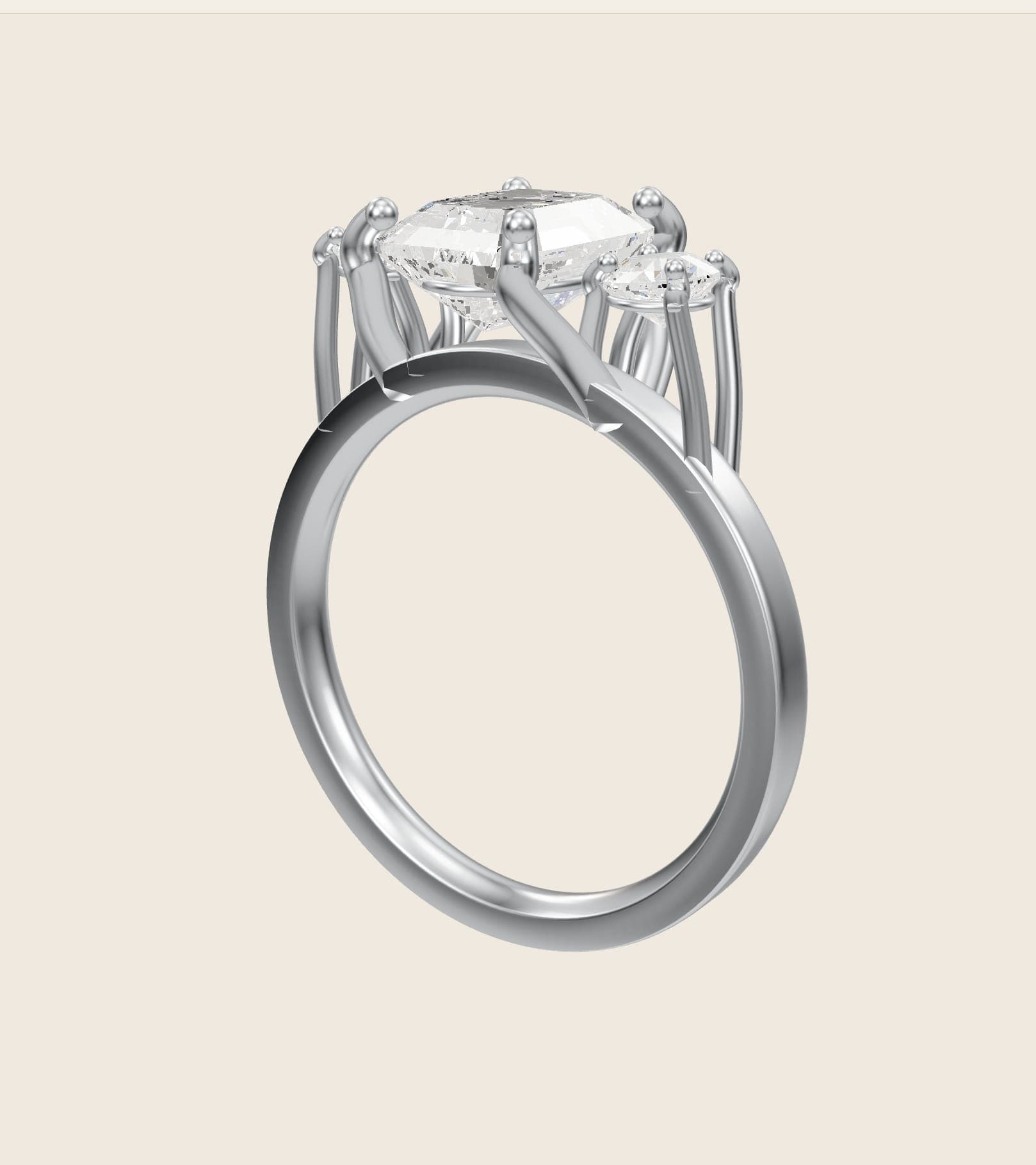
What it is
The center stone sits in its own head; each side stone sits in a smaller basket just beside it, a little lower and tilted a few degrees toward the center so the three read as one piece. The side stones are usually round or pear, sometimes tapered baguettes beside an emerald cut, and they are typically about half to two-thirds the width of the center.
Three-stone
A center stone with a smaller stone on each side, usually round or pear.
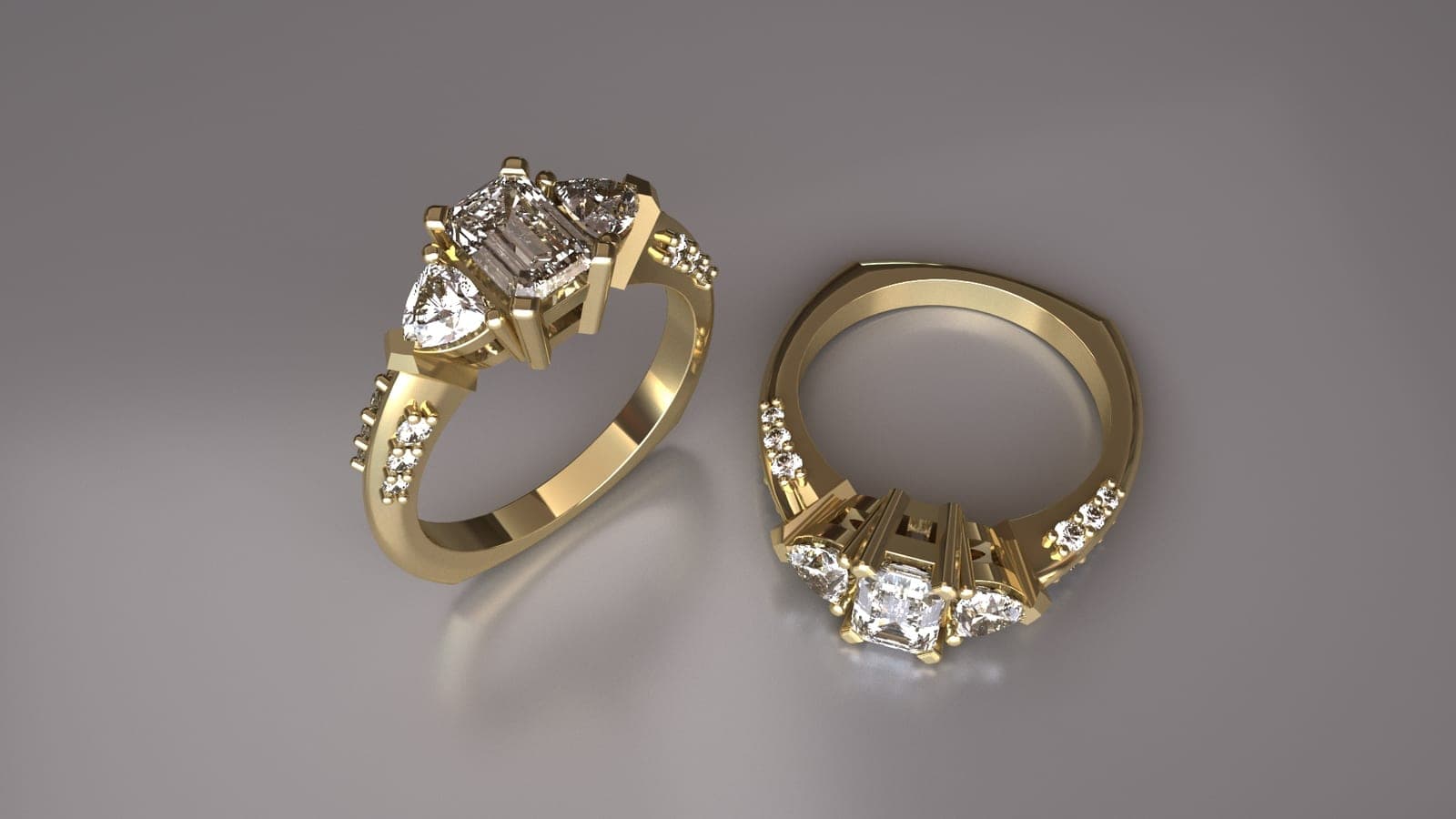
Why people love it
A wider, fuller look across the finger and more sparkle for a given center stone. The side stones can be a different shape, or a colored stone: sapphires beside a diamond is a classic. And the proportions can be tuned so the center still reads as the center.
- A wider, fuller look across the finger.
- The side stones can be a different shape or a colored stone.
Trade-offs
Three stones to source and three heads to care for, and the side stones should match each other in color and size. A straight wedding band meets the side stones first, so it usually needs a small gap or a contour. The ring is wider on the finger, which some people love and others find heavy.
- Three stones to source and three heads to care for.
- A straight wedding band may need a gap or a contour.
Who it suits
Someone who wants a fuller, more traditional ring, who likes the idea of a colored accent, or who wants to reuse two smaller heirloom stones beside a new center. It suits emerald cuts and ovals especially well.
Sizes
| Length × width | Depth | Diamond · approx. |
|---|---|---|
| 6.0 × 4.3 mm | 2.8 mm | 0.65 ct |
| 7.0 × 5.0 mm | 3.3 mm | 1.03 ct |
| 8.0 × 5.7 mm | 3.8 mm | 1.54 ct |
| 9.0 × 6.4 mm | 4.2 mm | 2.20 ct |
| 10.0 × 7.1 mm | 4.7 mm | 3.02 ct |
Emerald-cut center stones with their approximate diamond weight. Side stones at about 60% of the center's width add roughly a third again to the total carat weight. Natural and lab-grown diamonds weigh the same. All figures approx.
What affects the cost
Three stones instead of one: the center sets most of the price, and the two side stones add to it in proportion to their size and quality. Three heads mean more setting time and a little more metal. Colored side stones can cost less or more than diamond, depending on the stone.
Every custom piece is quoted after a consultation; there are no posted prices for custom work.
Care
Three heads mean three sets of prongs to check. A soak in warm soapy water and a soft brush reach between the stones; have the prongs checked yearly.
A diamond is the hardest thing you own, but the metal around it is not. Take the ring off for the gym, the garden and anything with a bar or a rope in it, and keep it away from chlorine and bleach, which attack gold alloys over time.
Questions
How big should the side stones be?
Around half to two-thirds the width of the center keeps the center as the focus. The studio builds them at 60% by default.
Can the side stones be a different shape?
Yes. Rounds and pears are the most common; tapered baguettes suit an emerald-cut center.
Can I use stones I already have?
Often. Sara checks their condition first, and two matched heirloom stones make beautiful sides.
Will a wedding band fit?
Usually with a small gap or a gentle contour under the side stones. Sara designs the two rings together.