Learn · Metals
Platinum
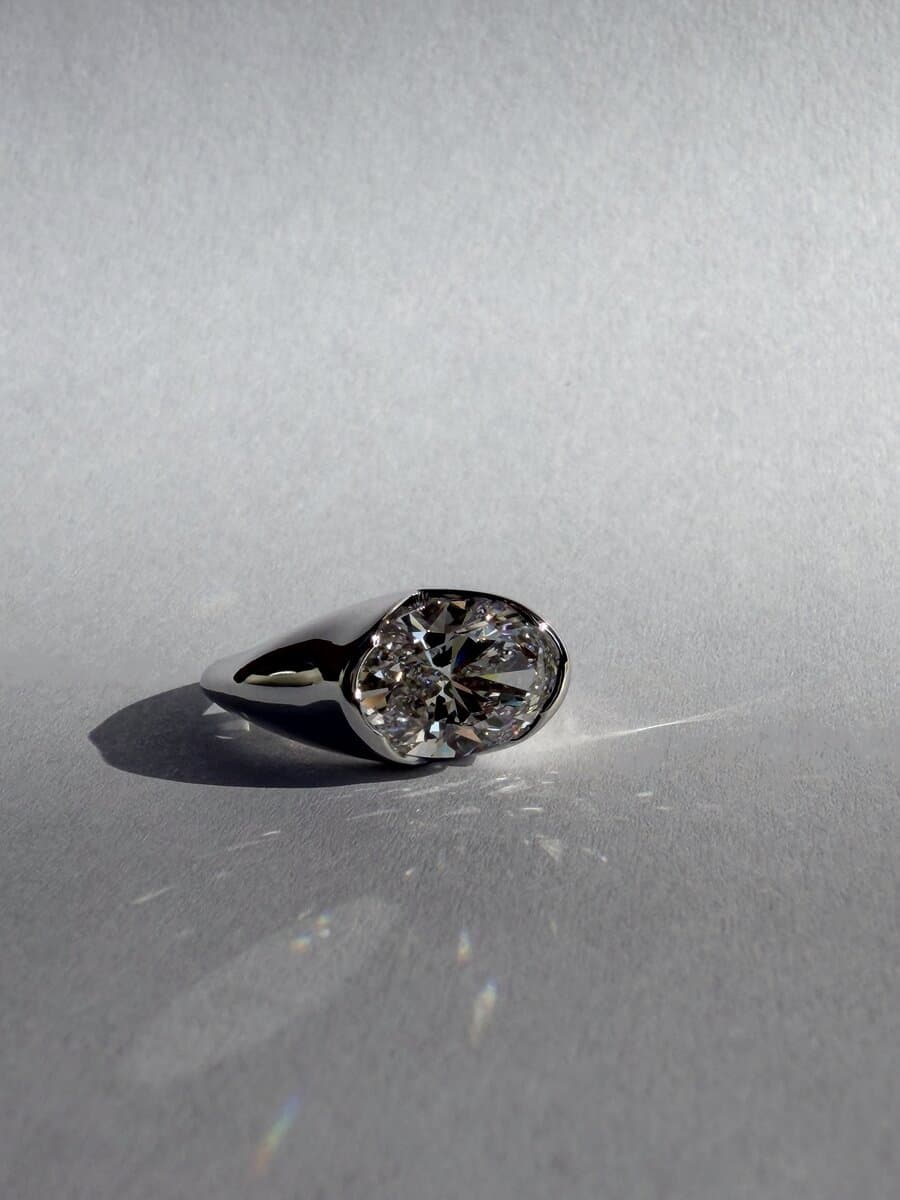
Platinum is white all the way through. It has its bright white finish without any plating, it is heavy on the hand, and with wear it takes on a soft satin patina that a polish takes away whenever you like.
What it is
Jewelry platinum is usually Platinum 950: 950 parts in every thousand are platinum, and the rest are other platinum-group metals, such as iridium or ruthenium. Pacific Jewel’s platinum is Platinum 950.
In the United States, only metal that is at least 950 parts per thousand platinum may be called simply “platinum”. Lower purities have to carry their number, such as 900Pt or 850Pt.
Platinum does not tarnish, and it keeps its natural white color. Its white is the metal itself, not a layer on top of it.
Platinum 950
At least 950 parts per thousand platinum, the rest other platinum-group metals; naturally white.
Why people love it
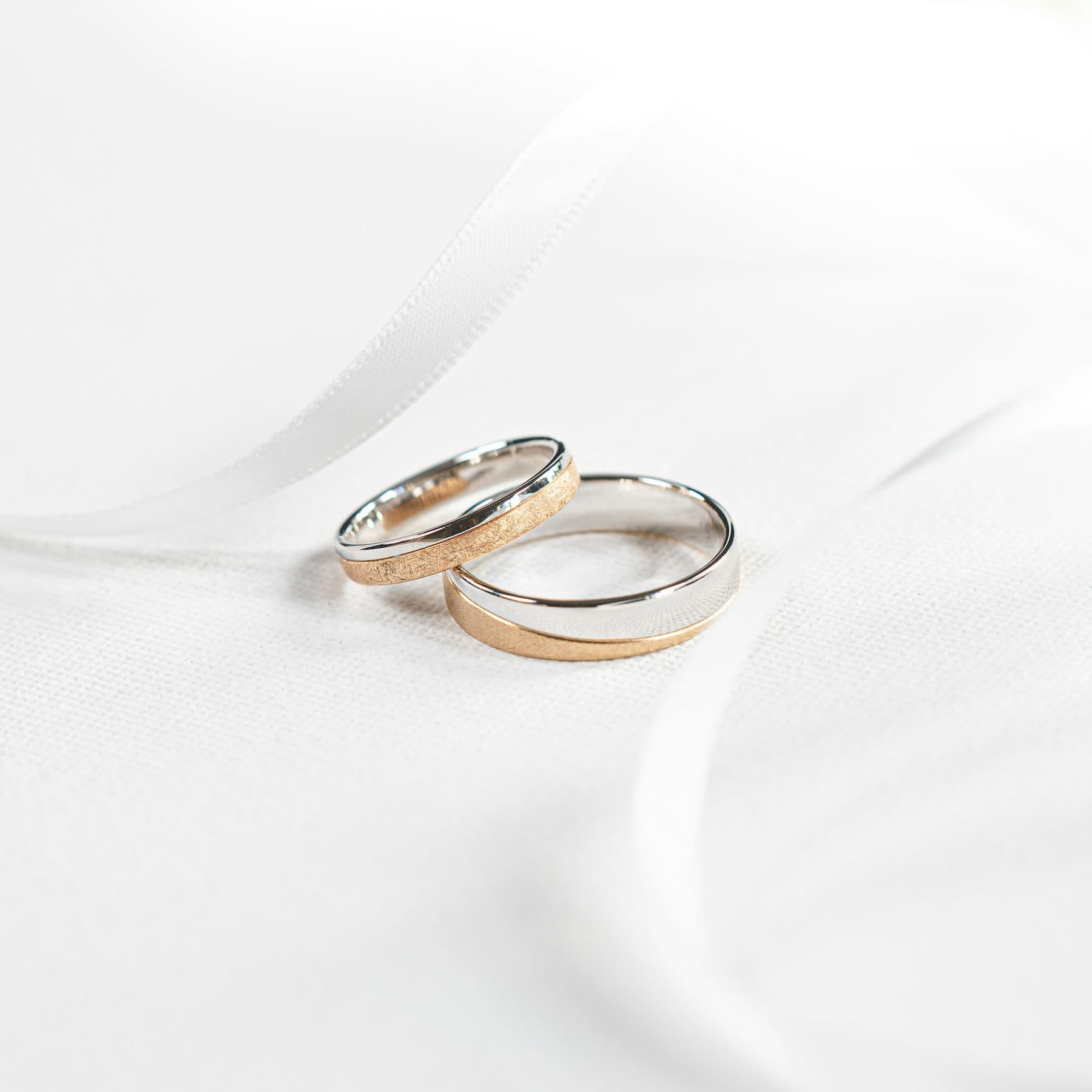
It needs no plating to stay white. White gold is usually plated with rhodium for its bright white, and that plating wears away gradually and is renewed from time to time, more often on a ring worn every day. Platinum has its bright white finish without plating, so there is no layer to wear through.
The feel of it. Platinum is very dense: by the studio’s own figures, the same ring weighs about 1.6 times as much in platinum as in 14k gold, and about 1.3 times as much as in 18k. That weight is part of how a platinum ring feels on the hand.
How it wears. A scratch in platinum moves the metal aside rather than removing it. Over time the surface takes on a soft satin sheen called a patina. You can keep it, or a polish takes it away and brings back the mirror.
GIA calls platinum hypoallergenic. And a white metal can make a colorless or near-colorless diamond look more colorless; white prongs do this even on a yellow gold band.
- Bright white without plating, so there is no plating to renew.
- GIA calls it hypoallergenic.
- A scratch moves the metal aside rather than removing it.
Trade-offs
The weight: about 1.6 times the same ring in 14k gold. On a wide band, that is a ring you feel.
The patina comes back. A polished platinum ring takes on its satin sheen again with wear, so a mirror finish all the time means a polish now and then.
More bench time. Platinum melts at 1,768 °C, against 1,064 °C for gold, and finishing it to a mirror polish takes longer. GIA notes that while platinum currently costs less than gold, the labor for platinum jewelry costs more.
- About 1.6 times the weight of the same ring in 14k gold.
- Takes on a soft satin patina with wear; a polish takes it away.
Who it suits
Anyone who wants a white ring with no plating to renew, anyone who likes a ring with some weight to it, and anyone setting a colorless or near-colorless diamond, which a white metal can make look more colorless. GIA calls platinum hypoallergenic, which matters to sensitive skin.
Sizes
The Design Studio weighs every design from its real geometry, with each metal’s density: Platinum 950 at 20.7 g/cm³, against 15.6 for 18k yellow gold and 13.1 for 14k. That is why the same ring weighs about 1.6 times as much in platinum as in 14k, and about 1.3 times as much as in 18k. Pure platinum is denser still, 21.45 g/cm³.
Choose platinum for any design in the studio to see its weight in grams and pennyweights, then switch the metal to see the same ring in gold.
What affects the cost
At the reference gold and platinum prices (October 13, 2026), the metal in a platinum ring is worth about the same as the same ring in 14k gold and about 35% less than in 18k gold, even though platinum weighs about 1.6 times as much as 14k. Sara quotes the finished piece, which also includes platinum’s extra bench time.
Platinum’s price per ounce fell below gold’s in January 2015 and has stayed below it since. A platinum ring holds more metal by weight than the same ring in gold; the line above weighs the two against each other at the prices it names.
What sets the cost of a platinum piece: the weight of metal, the extra bench time platinum takes, and, separately, the stone.
Every custom piece is quoted after a consultation; there are no posted prices for custom work.
Care
Clean it in warm water with a drop of dish soap and a soft brush, rinse, and dry with a lint-free cloth. Pacific Jewel rings come back to Sara for a clean and an inspection whenever you like.
The patina is normal. A polish takes it back to a mirror whenever you want it. Platinum that has not been plated never needs re-plating.
Questions
Does platinum need rhodium plating?
No. Platinum has its bright white finish without plating. Some makers rhodium-plate platinum anyway, and a plated piece then needs re-plating from time to time, so it is worth asking whether a platinum piece is plated.
Is platinum more expensive than gold?
Per ounce, no: platinum has cost less than gold since January 2015. A platinum ring uses more metal by weight than the same ring in gold, and GIA notes the labor for platinum costs more, so Sara quotes the finished piece.
Platinum or white gold?
Both are good choices. Platinum is white without plating, and heavier; white gold is lighter and usually rhodium-plated, with the plating renewed from time to time. Platinum vs white gold sets them side by side.
Does platinum scratch?
Yes. A scratch moves the metal aside rather than removing it, and over time the surface becomes a soft satin patina, which a polish takes away.
What does Pt950 mean?
That the metal is 950 parts per thousand platinum. In the United States, metal of at least that purity may be called simply “platinum”.
Related
Sources
- US Federal Trade Commission, Guides for the Jewelry, Precious Metals, and Pewter Industries (16 CFR Part 23)
- GIA 4Cs, choosing a white metal for an engagement or wedding ring
- GIA 4Cs, the best ring material for everyday wear
- GIA 4Cs, platinum
- GIA 4Cs, choosing the metal for an engagement ring setting
- World Platinum Investment Council, platinum facts
- Ganoksin, platinum durability and scratching
- Platinum Guild International, why platinum
- US Geological Survey, platinum-group metals, March 2015
- Kitco, gold price chart