Learn · Metals
14k vs 18k gold
14k and 18k are both solid gold; the number says how much of the metal is gold. 18k is three quarters gold, 14k a little under three fifths. The lower the karat, the more durable the gold, so the right one depends on how you wear a ring more than on which is “better”.
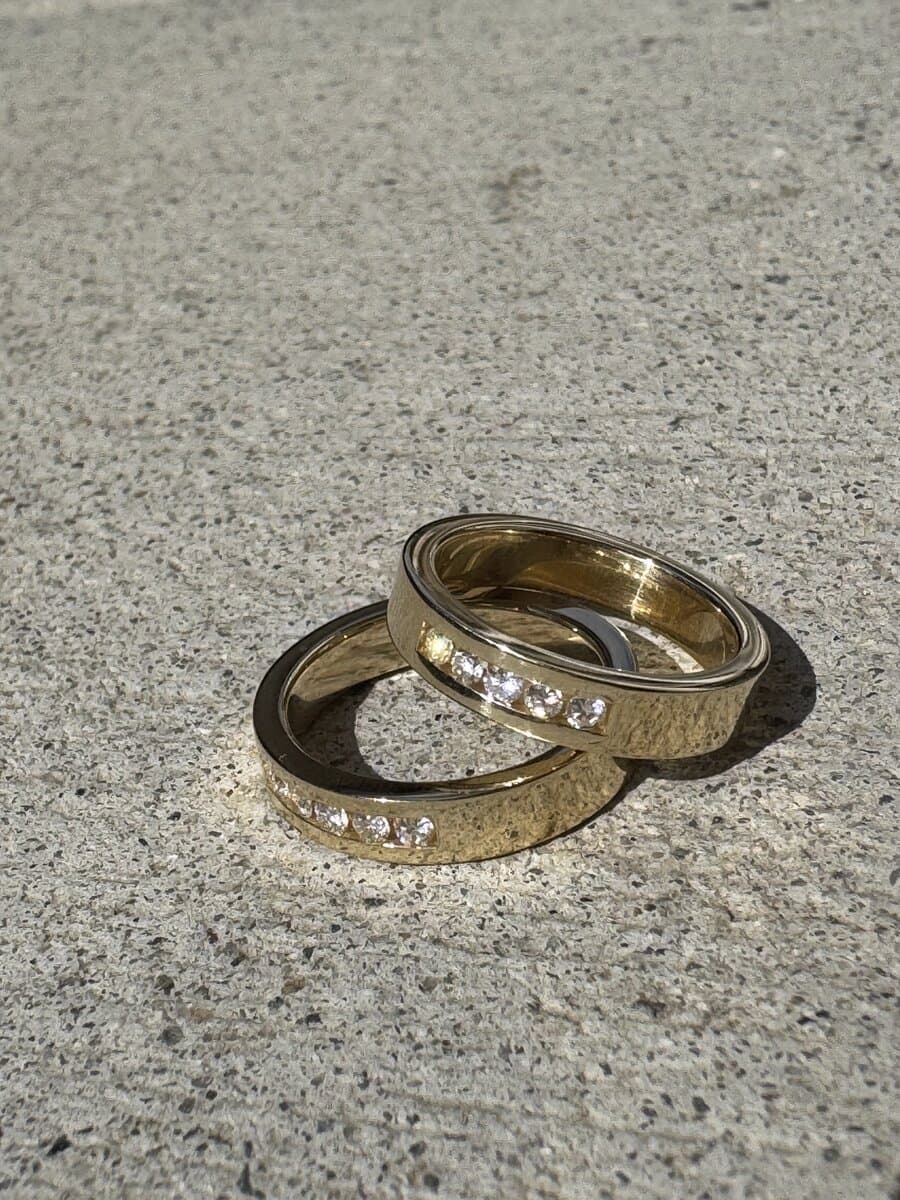
What it is
Pure gold is too soft for a ring, so it is alloyed with other metals. 18k gold is 75% gold and is stamped 750. 14k gold is 58.3% gold and is usually stamped 585.
The rest of the alloy sets the color. Yellow gold is alloyed with copper, silver and zinc. Rose gold takes its pink from copper: the more copper, the pinker. White gold is alloyed with nickel or palladium, plus copper and zinc, and is usually plated with rhodium. Sara works in both, in yellow, white and rose.
14k yellow gold
58.3% gold, usually stamped 585, alloyed with copper, silver and zinc.
18k yellow gold
75% gold, stamped 750, alloyed with copper, silver and zinc.
14k rose gold
58.3% gold; its pink comes from copper, and the more copper, the pinker.
18k rose gold
75% gold, stamped 750, with copper for its pink.
Why people love it
14k: the lower the karat, the more durable the gold, which makes 14k the practical choice for a ring worn every day, a thin band, or prongs that take the knocks.
18k: three quarters gold, so more gold in every gram of the ring.
- 14k yellow gold: More durable than 18k: the lower the karat, the more durable the gold.
- 14k yellow gold: A warm, classic yellow.
- 18k yellow gold: Three quarters gold.
- 18k yellow gold: More gold, so more metal value in every gram.
- 14k rose gold: More durable than 18k rose.
- 14k rose gold: A warm pink.
- 18k rose gold: More gold by weight than 14k rose.
Trade-offs
18k is somewhat softer than 14k, so it takes marks a little more easily. 14k carries less gold.
In white gold, either karat is usually rhodium-plated, and the plating wears away gradually and is renewed from time to time. Some white gold alloys contain nickel, which people with a nickel allergy should avoid; palladium white gold is the nickel-free alternative.
- 14k yellow gold: Less gold than 18k.
- 18k yellow gold: Somewhat softer than 14k, so it takes marks a little more easily.
- 14k rose gold: Less gold than 18k rose.
- 18k rose gold: Somewhat softer than 14k rose.
Who it suits
14k for a hands-on life, a thin band, and anyone who wants durability first. 18k for more gold in the piece. For a nickel allergy, a palladium white gold in either karat, or platinum, which GIA calls hypoallergenic.
Sizes
The Design Studio offers band widths from 1.5 mm to 6 mm and shows the metal weight of any band in grams and pennyweights from its real geometry.
By the studio’s densities, 18k yellow gold is 15.6 g/cm³ and 14k yellow 13.1, so the same band weighs about 1.2 times as much in 18k.
What affects the cost
The gold in the piece: its weight, set by the band’s width and thickness, the ring size and the head, times its purity and the day’s gold price. 18k is three quarters gold and denser, so the same ring holds more gold, and costs more, in 18k. White gold adds its rhodium plating. The stone and the setting time are separate.
Every custom piece is quoted after a consultation; there are no posted prices for custom work.
Care
Gold resists tarnish and corrosion. Clean it in warm water with a drop of dish soap and a soft brush, rinse, and dry with a lint-free cloth. Pacific Jewel rings come back to Sara for a clean and an inspection whenever you like.
Questions
Which is better for an engagement ring, 14k or 18k?
Both are solid gold. 14k if durability matters most, since the lower the karat, the more durable the gold; 18k for more gold in the piece.
Does 14k gold tarnish?
Solid gold, 14k or 18k, resists tarnish and corrosion. Gold vermeil, which is plated, is a different thing.
Is 18k too soft for a ring?
No. 18k is somewhat softer than 14k, so it takes marks a little more easily; it is pure, 24k gold that is too soft for a ring.
What do 585 and 750 mean?
They are the stamps for the gold content. 750 is 18k, 75% gold; 585 is the usual stamp on 14k, which is 58.3% gold.
What about nickel allergies?
Some white gold alloys contain nickel, which people with a nickel allergy should avoid. Sara can make it in a nickel-free palladium white gold, or suggest platinum, which GIA calls hypoallergenic.